ICYMI: Miller Participates in Hearing to Secure U.S. Supply Chains for Critical Resources in Central Asia and Africa
Washington, D.C. – Today, Congresswoman Carol Miller (R-WV) joined her colleagues on the Ways and Means Committee for a hearing to secure domestic supply chains for critical resources with our partners in Central Asia and Africa.
A video and transcript of Congresswoman Miller’s questions and the provided responses can be found below.
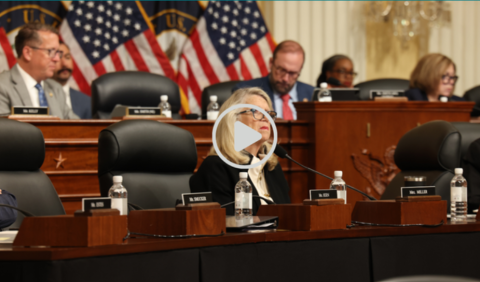
Congresswoman Miller began by highlighting Central Asia’s role in diversifying the U.S. supply chain for critical minerals and emphasizing the need for the United States to cement the region as a key strategic and economic partner.
"Thank you Chairman Smith for holding this hearing. The issues that we are discussing today are so crucial to securing our supply-chains and restoring American manufacturing dominance.
I just returned from my second visit to Central [Asia] with Chairman Smith. This morning I was wide awake at four, and yesterday it was one-thirty. It is going to take me a while to get used to it, but I was so glad that my Chairman and my colleagues had the opportunity to experience the beauty and the progress in Central Asia. I hope they discovered a newfound urgency in the deepening of our relationships with these nations.
We should not have a conversation about diversifying our supply chains for critical minerals without Central Asia. Mr. Herbst, you mentioned in your testimony that Kazakhstan is the world's largest uranium producer, ranks third globally in titanium production, and has the second largest manganese reserves, and has approximately 36 million tons of copper reserves. Similarly, Uzbekistan has reserves of tungsten, lithium, manganese, and other critical minerals with its mineral resource potential estimated at $5.7 trillion.
The United States is 100% import reliant on several of these minerals, and in some cases that reliance is on China. Central Asian nations are eager to forge deeper relationships and partnerships with the United States, and they’re actively seeking investments from American companies. The new leaders in these countries have worked tirelessly to make economic and social reforms to enter the global economy. They really feel that they’re on the right track, acting like democracies. President Trump has made significant efforts to renew American engagement in these regions.
It is therefore high time Congress takes affirmative steps to cement the United States as a key strategic business partner for Central Asia.
The Jackson-Vanik amendment is sending the wrong signal. It’s an outdated remnant of the Cold War, and it is forcing our investors to deal with these nations at an arm’s length and allowing China and Russia to continue their economic dominance in the region.
I have introduced legislation with my friend Congressman Panetta to lift Jackson-Vanik for all Central Asian nations, and I urge my colleagues from across the aisle to support this initiative. Every day that Congress doesn’t act on this is a day we are deepening our dependence on China and neglecting an untapped potential in Central Asia,” said Congresswoman Miller.
Congresswoman Miller then questioned Ambassador John Herbst, Senior Director of the Eurasia Center at the Atlantic Council, about the removal of the Jackson-Vanik amendment and how doing so could strengthen trade relations between the United States and Central Asian nations.
“Ambassador Herbst,can you speak plainly on why Jackson-Vanik needs to be lifted for Central Asian nations and what the immediate positive effects could be? Can you also speak to the progress these nations have made that will ensure security of investment in the region?” asked Congresswoman Miller.
“Thank you very much for your advocacy of this very sensible idea. We have a problem, which I think this committee recognizes, that two large nations consider us as a principal adversary, Russia and China. And China in particular, which has a world class economy and which has established its stranglehold over critical and rare Earth minerals, is using this very much to our disadvantage.
The Central Asian countries live in a very dangerous neighborhood. China on the one side, Russia on the other, Iran on a third, and they want the economic, political, and even the security advantages of a closer relationship with us. Given the dangers we face from China's control over critical and rare Earths, it’s essential for us to develop all the sources of supply of which these nations have a fair amount.
It’s true that the political and economic practices in central Asia are not wonderful. It's also true, as you've pointed out, that we've seen serious step towards reform in Uzbekistan since Mirziyoyev took over, my goodness, ten years ago. And we've seen steps forward under Tokayev in Kazakhstan, and we have something to work with.
It doesn't mean it's always going to be pretty. It doesn't mean that there aren't human rights abuses there, but those human rights problems will only improve by closer partnership with us. And again, we have to worry about our own security. I wish that our policy across the world was as clear in recognizing the dangers posed to us by an aggressive China, an aggressive Russia, as demonstrated by this committee.
But we need to work on that, and we need to address this absolutely critical, rare Earth problem that we have. I have no doubt that despite our laggard position today, if the Administration and Congress, multiple administrations and multiple congresses work together on this as a high priority, we can improve our circumstances dramatically and reduce our vulnerability. But this requires major effort,” answered Ambassador Herbst.
###