Miller Participates in Hearing on Maintaining American Innovation and Technology Leadership
January 14, 2026
Washington, D.C. – On Tuesday, Congresswoman Carol Miller (R-WV) participated in a Ways and Means Trade subcommittee hearing discussing trade policy and its role in maintaining American innovation and technology leadership. A video and transcript of the Congresswoman's questions and provided responses can be found below.
Image
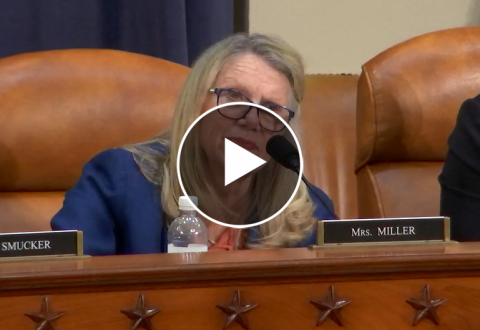
Congresswoman Miller began by highlighting the Trump Administration's historic achievements in ensuring anti-discriminatory practices against U.S. tech firms in recent trade agreements before questioning expert witness Nigel Cory, Director of Crowell Global Advisors, on the actions Congress should take to quell remaining discriminatory practices in Korea.
"Thank you, Chairman Smith for hosting this hearing today and your leadership on digital trade issues. I also want to thank the witnesses for being here today.
President Trump is making historic strides to ensure American dominance in the digital trade sector. For the first time ever, countries are specifically agreeing not to discriminate against U.S. tech firms in the bilateral trade deals negotiated by President Trump.
This is a welcome change after the Biden Administration abandoned the digital trade sector, which opened the door for other nations to impose discriminatory taxes and regulations upon American digital trade firms.
It is duly important that Congress ensures that these agreements are enforced as other countries continue attempts to stifle the free flow of digital trade.
This is most apparent in South Korea, where the National Assembly continues to advance legislation that targets U.S. companies, including a recently passed censorship bill, and recently launched a political witch hunt against two American executives.
Mr. Cory, do you believe that the recent actions taken by Korea is meant to squeeze American firms out of the Korean market and does it raise national security concerns? How should Congress address these issues?" asked Congresswoman Miller.
"Thank you, Congresswoman Miller, and I appreciate your leadership on these issues as it relates to digital trade and Korea.
Korea should be one of the United States’ closest digital trade allies. Yet it has a frustrating list of issues that make life hard for U.S. firms, and it continues to add to them. As you mentioned, there's a network bill that they've proposed which may be problematic for U.S. firms, and there's a proposed platform fairness bill as well, which also could make things worse as it relates to what the KFTC, the Korean Fair Trade Commission does as it relates to U.S. firms. And so there's ongoing frustration that things in Korea don't get easier and better despite KORUS' long existence and the range of rules within it and the pressure born there.
And so I think it's a matter of keeping a close eye on it and keeping pressure on the administration to turn the initial commitments they got with Korea into real, tangible, enforceable rules there and ensuring that, like the EU, they don't add new barriers to it after the fact. And so it's going to be ongoing scrutiny, which is another key role for Congress to ensure that trading partners don't try and add to it once they've got a deal done and they think the limelight moves on," responded Mr. Cory.
The Congresswoman then discussed concerns with the European Union's similar discriminatory trade practices against U.S. tech firms and the financial burden they have on American companies.
"Similarly, I am concerned that the European Union is not upholding their commitment to not discriminate against U.S. firms.
Despite agreeing to address unjustified digital trade barriers in the US-EU agreement, the EU has taken discriminatory actions that are estimated to cost U.S. companies up to $97.6 billion dollars annually in compliance costs, revenue losses, and financial penalties.
What’s even more troubling is that this is not occurring in a vacuum. EU regulators appear to be actively campaigning globally for our trading partners to replicate their approach. Countries like Brazil, Australia, and the UK have all adopted or are actively considering copycat versions of the Digital Markets Act (DMA) and other EU policies.
President Trump is making historic strides to ensure American dominance in the digital trade sector. For the first time ever, countries are specifically agreeing not to discriminate against U.S. tech firms in the bilateral trade deals negotiated by President Trump.
This is a welcome change after the Biden Administration abandoned the digital trade sector, which opened the door for other nations to impose discriminatory taxes and regulations upon American digital trade firms.
It is duly important that Congress ensures that these agreements are enforced as other countries continue attempts to stifle the free flow of digital trade.
This is most apparent in South Korea, where the National Assembly continues to advance legislation that targets U.S. companies, including a recently passed censorship bill, and recently launched a political witch hunt against two American executives.
Mr. Cory, do you believe that the recent actions taken by Korea is meant to squeeze American firms out of the Korean market and does it raise national security concerns? How should Congress address these issues?" asked Congresswoman Miller.
"Thank you, Congresswoman Miller, and I appreciate your leadership on these issues as it relates to digital trade and Korea.
Korea should be one of the United States’ closest digital trade allies. Yet it has a frustrating list of issues that make life hard for U.S. firms, and it continues to add to them. As you mentioned, there's a network bill that they've proposed which may be problematic for U.S. firms, and there's a proposed platform fairness bill as well, which also could make things worse as it relates to what the KFTC, the Korean Fair Trade Commission does as it relates to U.S. firms. And so there's ongoing frustration that things in Korea don't get easier and better despite KORUS' long existence and the range of rules within it and the pressure born there.
And so I think it's a matter of keeping a close eye on it and keeping pressure on the administration to turn the initial commitments they got with Korea into real, tangible, enforceable rules there and ensuring that, like the EU, they don't add new barriers to it after the fact. And so it's going to be ongoing scrutiny, which is another key role for Congress to ensure that trading partners don't try and add to it once they've got a deal done and they think the limelight moves on," responded Mr. Cory.
The Congresswoman then discussed concerns with the European Union's similar discriminatory trade practices against U.S. tech firms and the financial burden they have on American companies.
"Similarly, I am concerned that the European Union is not upholding their commitment to not discriminate against U.S. firms.
Despite agreeing to address unjustified digital trade barriers in the US-EU agreement, the EU has taken discriminatory actions that are estimated to cost U.S. companies up to $97.6 billion dollars annually in compliance costs, revenue losses, and financial penalties.
What’s even more troubling is that this is not occurring in a vacuum. EU regulators appear to be actively campaigning globally for our trading partners to replicate their approach. Countries like Brazil, Australia, and the UK have all adopted or are actively considering copycat versions of the Digital Markets Act (DMA) and other EU policies.
Mr. Cory, other than the financial burden these actions put on U.S. companies, how do they threaten U.S. innovation and leadership in the digital sector?” asked Congresswoman Miller.
“The contagion of these DMA style, status based, ex-ante regulations is that it will inevitably lead the U.S.'s leading digital firms, mostly American, to essentially redesign products and services jurisdiction by jurisdiction. Instead of setting the system in place once and then working around the edges, the DMA regime systems require them to re-engineer in some way or another in jurisdiction after jurisdiction.
And so that means that it makes obviously their operations much harder. It makes it much harder for them to develop new products and roll them out. And so you'll see product delays, you'll see less innovation, you'll see, [as a] by product of that, less trade. And that's just with what we're seeing at the moment. And so if the contagion spreads to more jurisdictions, the operational burden this puts on how they engineer their systems and how they come up with new innovations and how they deploy those innovations only gets harder.
Lastly, but not least, what it also will lead to is US firms facing a growing range of punitive investigations and increasingly large fines. It's been bad enough that we see this in Europe, but if this starts happening to a similar degree in multiple markets, then it becomes really problematic,” responded Mr. Cory.
###
Issues:Congress